Showing posts with label nature. Show all posts

Monday, July 3, 2023

Black River 'Bog'


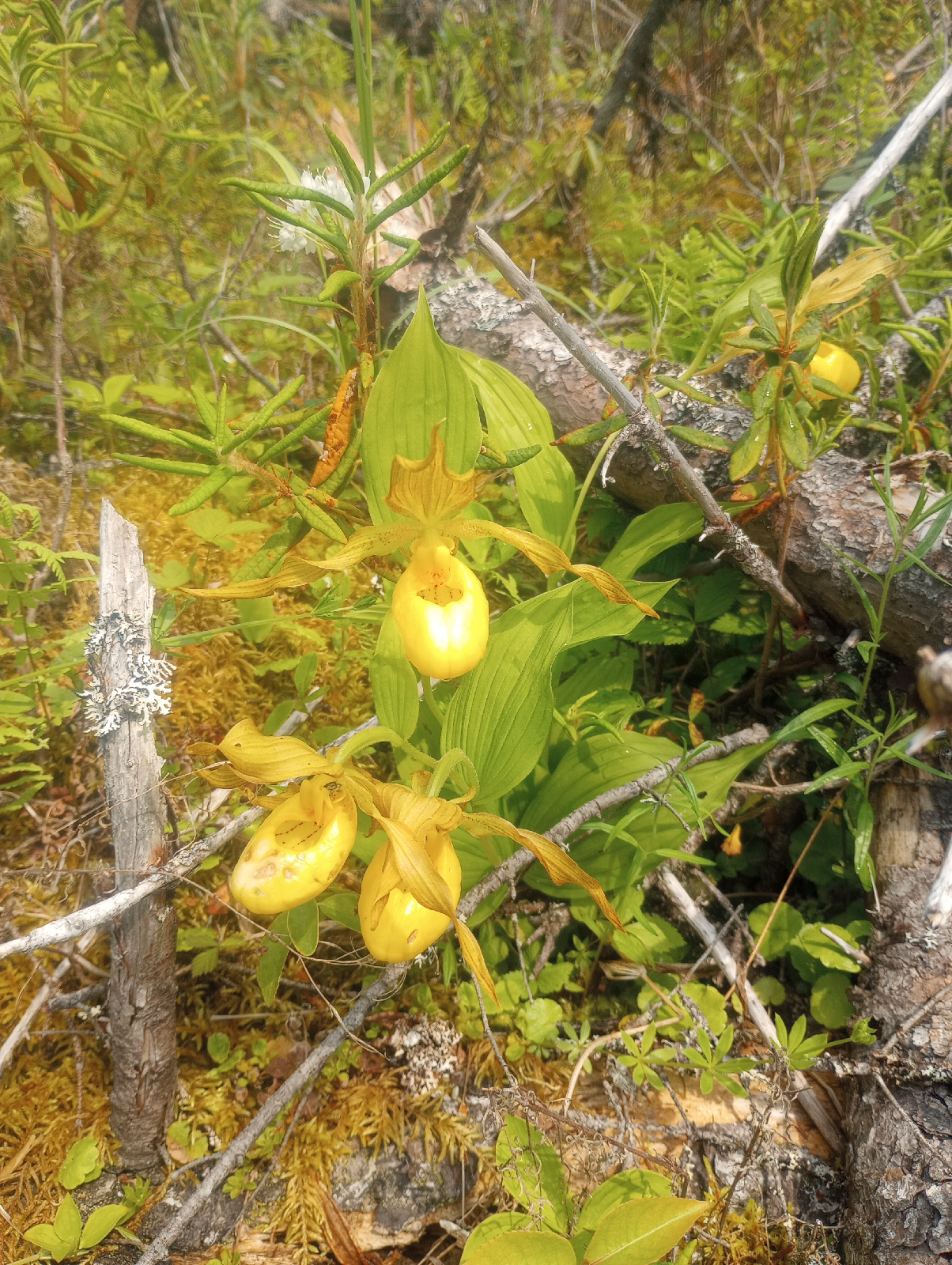
At the end of June I got to join other members of the Nova Scotia Wild Flora Society for a full day of fun at a special place in Cape Breton. Called the 'Black River Bog,' it is a wetland that is more of a fen and a marsh than a bog, in the technical sense. It is home to some uncommon and very rare plants, such as yellow lady's slippers.


The main trail is an old railbed, easily traveled, but we had to bushwhack into the wet bushes and trees, of course. I'd been here once before, and found an amazing colony of showy lady's slippers. 
This protected area is at the north end of Lake Ainsley, and I can tell there is a lot to see in this area of NS.


We were pleasantly surprised to see some yellow lady's slippers, just finishing their brief blooming season. It was quite an arduous romp through the woods, with no trail, especially for the 86 year old member of the group! We survived, and she did not implement any punishment upon me, after leading them all 'astray.' ;)


There were many beautiful sights, amid the plants and birds and scenery. I liked this scene upon a wooden bridge, like a bonsai arrangement of mountain ash, mountain holly and black crowberry...


One very rare species in this protected area is hoary willow / sage-leaf willow. I think this is the only NS location for it. 


In the same location, along the trail, are some other uncommon plants, including this unobtrusive, green orchid: northern wind bog orchid. I have seen this in other locations.


Some more common orchids were also seen, such as this dragon's mouth, one of three pink species seen in succession in the bogs at this time of year.


Oh, and the showy lady's slipper? The plants were not yet blooming in Cape Breton that day. They were arising and unfurling leaves, but the flower buds were not visible yet. Back on the mainland they would be out. Below is a photo from Cape Breton, alongside one little plant I have in my garden at home, in Amherst. 


 This one day in Cape Breton whetted my appetite. I need to get back this summer for more hiking and exploring. You should enjoy it too!

Wednesday, May 10, 2023

Spring Ephemerals

It is the season for wandering the woods and wild places, watching not only birds, but botany. The 'spring ephemerals' are coming into bloom, those plants that flower and leaf out quickly, and then dry up and disappear by the heat of summer. On a couple of hikes in Cumberland County lately I found some of these plants. The yellow trout lilies, aka dogtooth violets, above are one example. I also found a bit of Carolina spring-beauty, and a big patch of bloodroot.
Bloodroot was a wonderful find, along a shaded riverbank. I admit, some of these species do keep their leave most of the summer, but the flowers are short lived. Below is Dutchman's breeches, another rarer treasure around here. It completely disappears in the heat of summer. 
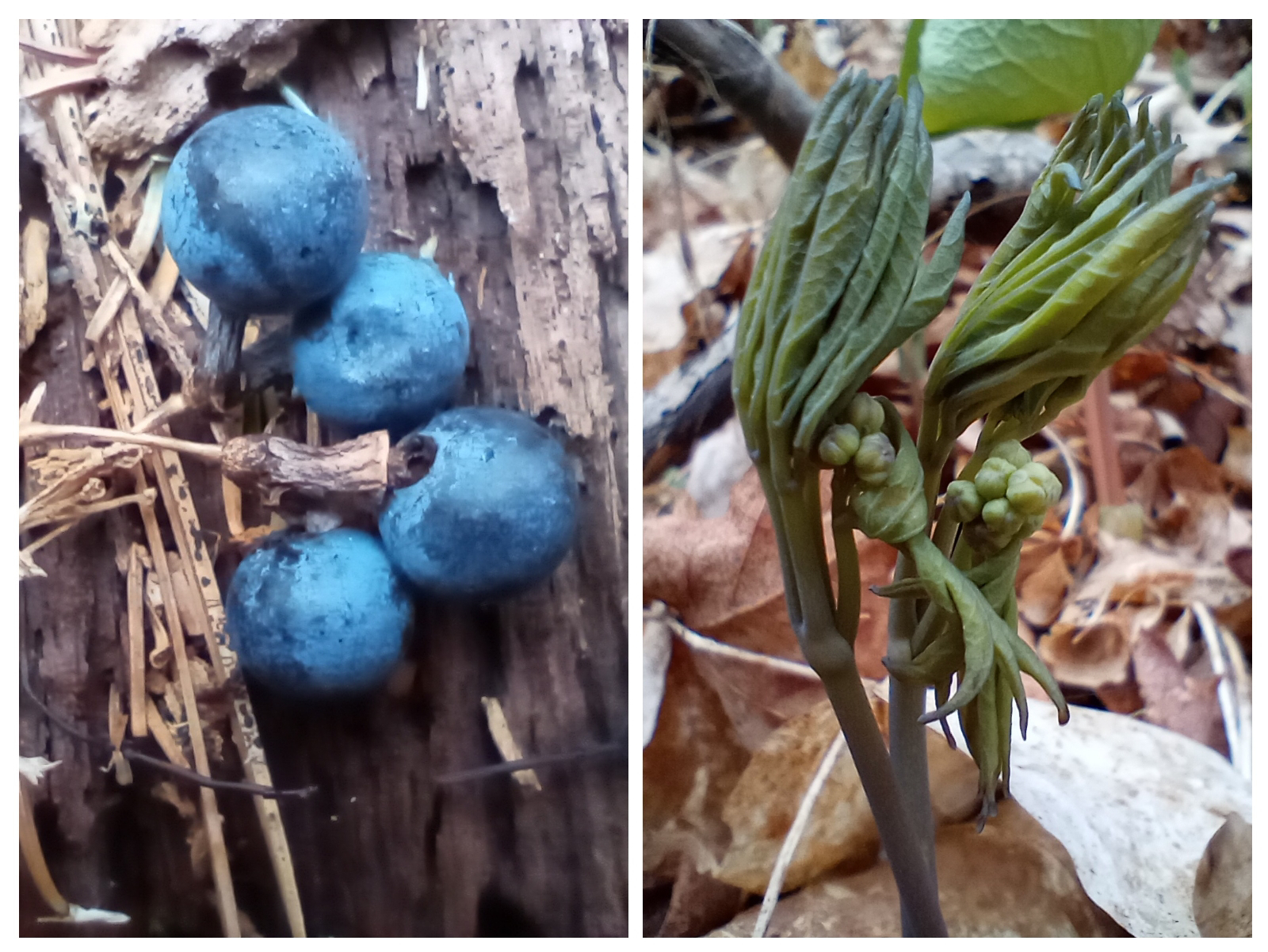
I sought out one certain location because I knew blue cohosh had been found there, and where it grows, other nice things do. Indeed. It led me to the bloodroot and other special plants. The cohosh is called 'blue' because of the vibrant berries, and here they are, ones that lasted all winter and were still lying upon the forest floor. The new plants are just unfolding, yet to leaf out and bloom with subtle, green flowers.
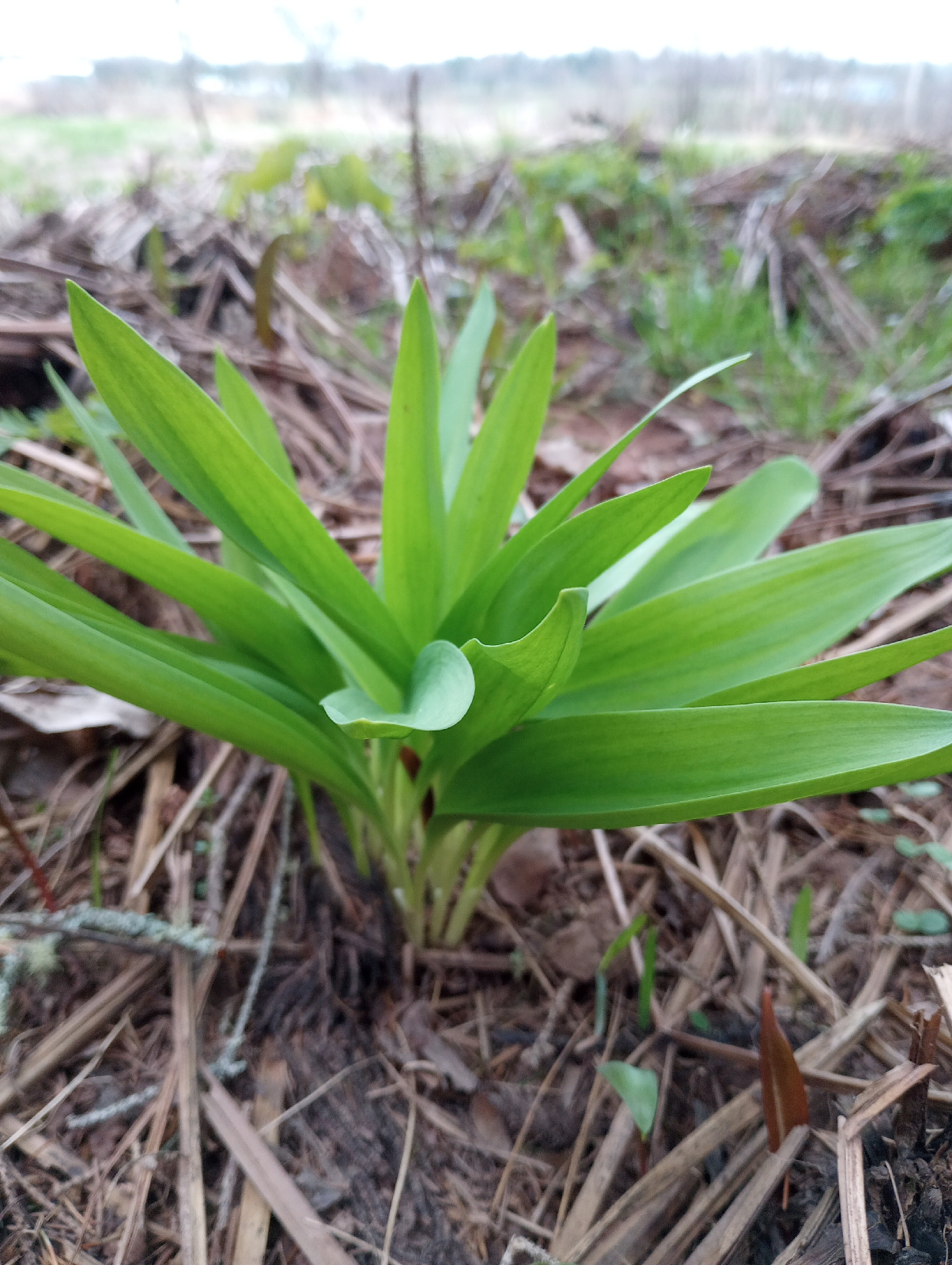
 A real surprise to me at one site was wild leek, or 'wide leek,' as it is named on iNaturalist. Not found in many locations in Nova Scotia, here was one large patch by a river, and extending into the woods of big sugar maples. 
This 'onion' - it is an Allium - leafs out now. Later, once the leaves have shriveled and disappeared, the greenish blooms arise, midsummer. 
In other regions, where it is not so rare, it is harvested as food - both the leaves, and the little bulbs. Usually called 'ramps,' each year I usually take one oniony leaf and eat it raw, in the woods. I saw them every year in the Digby County location. 
Not rare, but a definite joy of spring is the familiar mayflower. I found a thick patch of them today in the woods, still in full bloom, in a variety of pinks and whites. 
And my last photo is this prolific white violet I came upon in a wet area. There are quite a few violet species in NS, the blues and the whites always a bit confusing to me. No matter what I name them, they are lovely. 

Sunday, April 30, 2023

SERMON: Green Pastors

 10:30 am, Sun, April 30, 2023 - JGWhite / FBCA

(Psalm 23; 1 Peter 2:19-25)

 [SCENE ONE] One year ago this weekend Sharon and I took possession of our house up on Clinton Street, and after almost ten months ‘on the job’ now, you have a pretty good idea what you’ve got. For one thing, you got a ‘green’ pastor. Yes, yes, I know my name is Jeffrey George WHITE, but I am green. Not green in name, like Dan Green, but environmentally green, nature-loving green, creation curious green.

At this moment, I am part of the CNC and the CNC. I am a member of the Chignecto Naturalists Club; in fact, in a moment of need, I ended up becoming President. And I am taking part for four days right now in the City Nature Challenge, in which citizen scientists log many observations of plants, birds, lichens, fish, mammals, insects, fungi – every living thing they can find. I’ve been trying to get as many pictures of as many plants and organisms as I can (up in Westmorland County, actually) and post them online to the iNaturalist platform.

Yesterday I spent some time traipsing and trespassing in woods up towards Cape Tormentine. I observed this plant: Eastern Skunk Cabbage, which I befriended when I lived in Digby County.

Why would I care? Why would I care for you to be interested? Because I am a Pastor, a Shepherd to you, who can share creation deeply with you. I even pick this out of the world’s favourite Psalm, number twenty-three. YHWY God is a Shepherd, lies me down in green pastures, leads me beside still waters, provides everything needed, and leads on right paths. This is the same ‘LORD’ whom we praise as Creator, Creator of life, all life. I truly learned that ‘pastor’ and ‘shepherd’ are the same thing when I spent time in Bolivia. In Spanish, the Psalm begins: El SeƱor es me Pastor.

This sermon is really a testimony. I am going to work back through time. Let me end Scene One by answering this: Why am I so green? Because there is so much to enjoy in nature!

Here’s SCENE TWO. Beginning with a ‘plant’ I observed yesterday for the nature challenge: Orange-Cored Shadow Lichen – which is not quite a plant – it is a combination of at least one fungus and at least one alga. Many of the lichens that grow on trees and rocks and the soil are very sensitive to disturbance: to tree cutting, to air pollution, and so forth.  Their presence can be a sign of health, of old-growth forests; the absence of certain lichens is a sign of a wrecked landscape. I am reminded by orange-cored shadow lichen of what Christian environmentalism is.

In my mind, I go back thirty years, to meetings of the CABF, which then was called the ABF, a left-wing Baptist group of which First Baptist has always been in fellowship. ‘Back in the day,’ I would meet up with a retired Old Testament professor at these meetings, Dr. Morris Lovesey. He knew I had first graduated in Biology and Chemistry; he himself had a degree in geology. Again and again, he would say to me: work with Christianity and biology, the Church and science! For years I was not sure what on earth to do. When I finally preached my first Earth Day sermon, in about 2012, I got in trouble with several leading voices in the congregation!

Our religion can truly at times seem to be ‘so heavenly minded we are no earthly good.’ But we are here, on earth, where God indeed joined us, as one of us: Jesus of Nazareth, our Good Shepherd. We heard, in Peter’s advice to believers in households of long ago, ‘Return to the Shepherd and Guardian of your souls.’ Good advice. Yet we can hear this word speak and take us farther than usual. Is God not the shepherd and guardian of this planet? This Universe? And are we not to be little shepherds under the Good Shepherd? If I am a ‘shepherd’ or ‘pastor’ among you, many of you are also guides to other people. We all must work together to make a difference in this world of earth, wind, fire and water, and of every living thing. You, be a ‘green pastor’ too.

Why am I so green? Because of many people God used to influence me. Dr. Morris Lovesey. My Digby friend, Jonathan Riley, who became an amateur lichen expert to save them and the local forests. Linda Vogels, whom I got to know and love at seminars about creation care, and who keeps speaking out about doing the right day-to-day things for mother earth, aka Gaia.

SCENE THREE (of four. These scenes are getting too long!). The last couple days I observed a lovely, common shrub sometimes called Northern Wild Raisin. The long, brown, suede-like buds are just expanding to open now, and become leaves. This bush, and its Latin name, Viburnum cassinoides, always takes me back to the summer of 1992.

Picture me, freshly graduated with my science degree, and working for the summer at Acadia’s biology research station on a Shelburne County island, called Bon Portage. Oh, to be twenty-one again, and spend the summer on a windy, maritime island. I did not learn many names of plants in my degree; I learned them ‘for the fun of it,’ that summer, working on this with a masters student doing his research at the same place. Viburnum cassinoides was part of the botany we learned there.

You work on a biology research station – a whole island for a classroom – and you meet many fellow travellers on the journey of learning about this awe-inspiring world. I met birders, not just birdwatchers: birders, and joined the Nova Scotia Bird Society. By boss was actually an ornithologist, Dr. Peter Smith, who got married that very summer to Linda Lusby, formerly of Amherst.

Our Biblical image of the Shepherd with all the sheep who know the Shepherd’s voice rings so true. The Good Shepherd wants, works, to keep us together. Sometimes, a common enjoyment of nature is one way God brings people together.

Why am I so green? A shared joy in nature, shared with the most wonderful people. And we share life with so many other life-forms. All one family; all gift. Siblings of Wild Raisin.

SCENE FOUR. Another plant I observed this weekend of the Nature Challenge: the Pitcher Plant, carnivore of the bogs. This has been a favourite of mine since before I first saw one.

I first saw one on a camping trip to Briar Island, with the Middleton Baptist Christian Boys Group, at age 12. My one and only photograph from that wonderful, boyhood experience is me with a blooming pitcher plant in hand. I have a weak memory. I remember barely anything from that four-day wilderness camp, except that it was an amazing time. I even ended up with ‘Camper of the Year’ award!

My childhood was blessed with opportunities to enjoy nature. The summer I was six we moved to the Annapolis Valley and my backyard suddenly was my grandfather’s 20-acre campground, with lots of wild spaces. My other grand-father in Ontario was a gardener in his yard. I had houseplants inside our house, and wildflowers planted outside.

“You were going astray like sheep,” wrote Peter to his Church friends, long ago. The ways we humans have gone astray in our lifetimes includes creation crushing. Children today – all the upcoming generations – need the support of our Faith, which calls us into right relationship with Creator and creation.

Why am I so green? Nature was my backyard in my formative years. Family members were plant growers. My Baptist Church took this kid out for wilderness camping on islands: Briar Island, Mosher Island, even Isle Haute.

We do walk thru a dark valley on earth right now… In the environmental crisis, the Good Shepherd is still with us. This is what we need to remember. This is how we live. This is what the next generations needs to know, from us. They get lots of good info from schools and so forth. What hope, what plan, do we, Christianity, give them? What community and togetherness does Christ make possible? Let us, Church, be ‘a green pastor,’ in other words: a team of good shepherds, guides in creation. Seek this miracle with me: that our grandchildren and great-grandchildren will find that goodness and mercy will pursue and chase them all the days of their life.

                 SILENCE

Monday, April 24, 2023

Pezzlewig and Waterfalls


I've been wandering in the hills north of Five Islands, NS, for years now. Well, at least making an annual trip. Ever since a friend from 5I pointed out where her mother said the bloodroot grows. And where something like that grows, other nice plants grow. This area was once well inhabited. On maps it is called New Britain. Another local name is Pezzlewig - I'm not sure of the spelling.


I went up there the other day, to see if the bloodroot was in boom, and to hike all over the East Branch of the Bass River, known for a few nice waterfalls and one abandoned mine adit. It was an overcast, cool day, so the bloodroot was up but not open wide. Always nice to see it. 


Standing by these flowers one happens to have a view through the trees to the islands in the Minas Basin. 
Another early bloomer in Nova Scotia is beaked hazelnut, a shrub I saw quite a bit of. The female flowers have their vibrant colours out now, and the male catkins are shedding their yellow pollen.


The falls along the river were wonderful, and there were more of them than I was expecting. I ended up hiking, up and down, up and down, for about thirteen kilometres. Well worth it.


Another spring ephemeral I found in a stand of hardwood trees was Carolina spring-beauty, just about to open. It it had been sunny, they might have been unfurled.


Always on the lookout for lichens, I saw some very nice specimens. The upper right photo, globe ball lichen, is uncommon, and indicative of old growth. The lower left is a favourite - yellow specklebelly - and this one had a few little apothecia upon it, a very rare sight. 


I was very happy to find, in a small bit of swampy woods, several black ash trees. Sacred and purposeful to the first peoples, it is not common, and I had just recently become confident at identifying it. 

Though April has not had much precipitation, and the snow in the woods is just about gone, there seemed to be plenty of water flowing. 


I did find the adit, across the river from where I hiked. I did not bother getting wet feet to see it up close or discover how well it is sealed up to prevent entry... or not. See it, with a yellow sign, up the hill across the river?


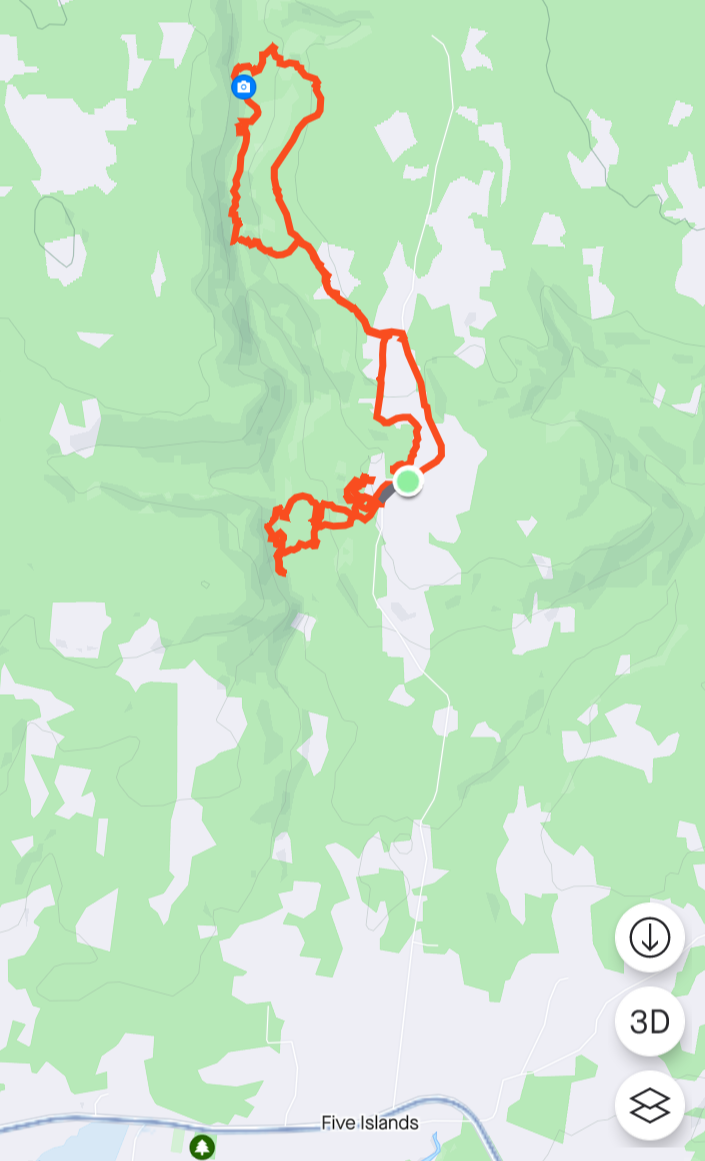
Here is the route of my ramblings. 13 + Km. This included a lot of ups and downs along the little valley of the East Branch Bass River. Not to be confused with the Bass River that flows through the village of Bass River, in the same county. 


I noticed lots of other things growing, many of which are just budding out. Spring is here; the onset is always wonderful. The photo I share is an extreme example of the fallen trees that barred my way, from time to time. Mostly red spruce, and some of them huge, they were down all over the place. 

Monday, January 9, 2023

Shulie Woods


West of Amherst in Cumberland County is a quiet, woodsy highway (209) with few human residents. One of the old communities, with just a few homes left, is Shulie, at the mouth of a river along the isolated, rocky shore of Chignecto Bay. I took a walk in the woods there last weekend. This is at the eastern end of a large acreage called the Raven Head Wilderness Area.
 

As you can see, there is no snow on the ground, to speak of, and not much frost in the ground either. The woods here are not more spectacular than other places, but very peaceful and quiet. Little hills with a few boulders rise up and down, with bits of swamp here and there. I barely heard a bird on my afternoon out. 


I wandered along a brook down to the shoreline. There was just enough cliff to make it impossible to get down to the beach... or back up from there. I viewed a small waterfall from above. The tide was almost high. A breeze was coming off the water. New Brunswick covered the horizon.


Part of my reason for wandering here was to do some lichen searching, and I found a few lovely species on rocks and upon the trees. I keep watching for species like Blue Felt Lichen - our new Nova Scotia Lichen - but have not seen it yet in this county.


This is a nice area I will explore, again and again, in each season of the year.